
Acoustic Curtains are an increasingly popular solution for those looking to improve acoustic comfort at home, reduce reverberation, soften outside noise, and create more pleasant, private, and comfortable spaces.
In many homes across Málaga and the Costa del Sol, we find living rooms with large windows, bedrooms facing busy streets, holiday apartments, home offices, or spaces with hard flooring, glass, and smooth walls that cause sound to bounce more than desired.
In these situations, a conventional curtain may provide decoration and privacy, but a well-designed acoustic curtain can offer an additional level of comfort.
However, it is important to be clear: an acoustic curtain does not turn a room into a soundproof studio. It does not replace professional acoustic insulation or completely eliminate outside noise. What it can do is help absorb part of the sound, reduce echo, improve the acoustic feel of the room, and provide greater privacy.
Various specialist sources agree that the effectiveness of acoustic curtains depends on factors such as thickness, density, material, layering, sound frequency, and installation method.
That is why, at Cortinas Factory Colors, we always recommend approaching acoustic curtains as a made-to-measure solution: with the right fabric, the correct dimensions, the appropriate track system, and professional installation.
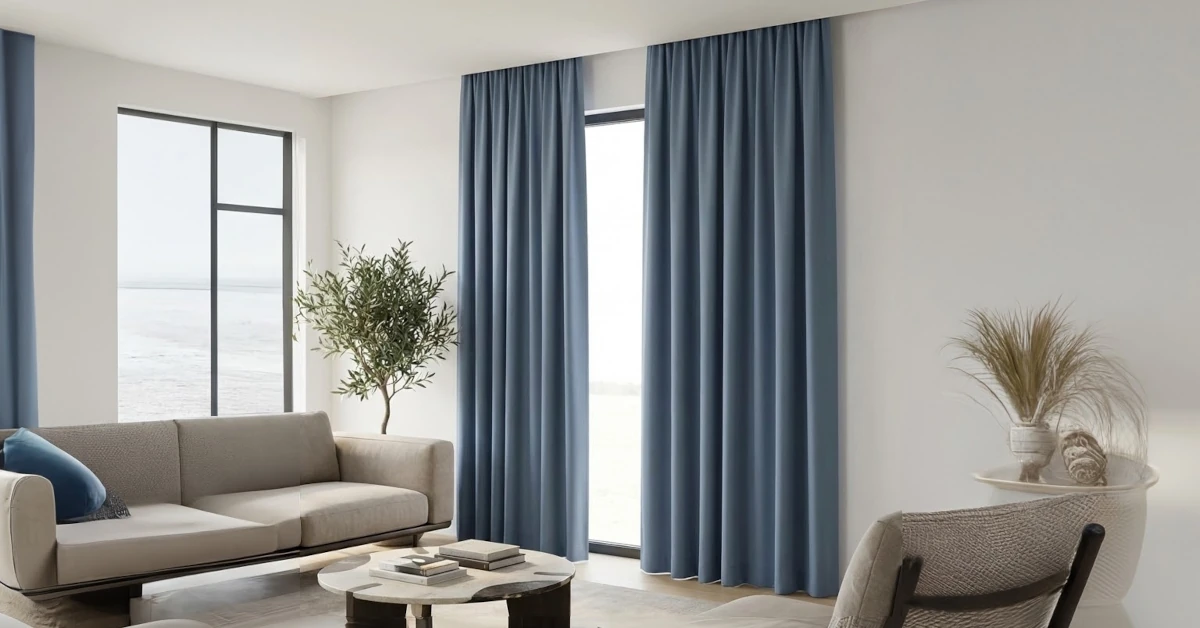
Acoustic curtains help improve acoustic comfort while creating a warmer and more welcoming atmosphere.
What Are Acoustic Curtains?
Acoustic curtains are curtains made from denser, heavier, or more technical fabrics designed to help improve the acoustic performance of a room.
Their main purpose is not only decoration or window coverage. They are also designed to reduce sound reflection on hard surfaces such as glass, walls, floors, or large windows.
A Textile Solution to Improve Acoustic Comfort
In rooms with many hard surfaces, sound bounces easily. This can create echo, uncomfortable ambient noise, or difficulty hearing clearly.
An acoustic curtain acts as a textile surface that helps absorb part of these sound waves, making the room feel more pleasant and comfortable.
In simple terms, it helps prevent sound from bouncing around so much.
Do Acoustic Curtains Really Work?
Yes, acoustic curtains can work — but within limits.
They should not be seen as a miracle solution or complete soundproofing system. Their effectiveness depends on many factors:
- The type of fabric.
- The thickness.
- The density.
- The number of layers.
- The amount of fabric used.
- The distance from the window.
- The type of curtain track.
- Side coverage.
- The curtain height.
- The type of noise.
- The sound frequency.
- The quality of the installation.
A lightweight or poorly installed acoustic curtain will have very little effect. In contrast, a denser curtain with a good drape, sufficient volume, and accurate measurements can noticeably improve the acoustic feel of a room.
Some manufacturers and specialists point out that these curtains can reduce noise and reverberation, especially when dense fabrics, multiple layers, or sound-absorbing materials are used.
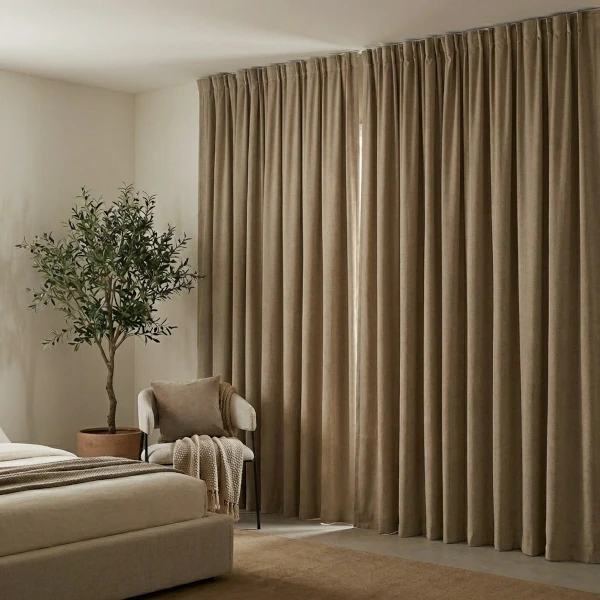
Weight, density, and fabric volume all influence acoustic performance.
Acoustic Curtains Do Not Mean Complete Soundproofing
Absorbing Sound Is Not the Same as Completely Blocking Noise
This point is essential.
Many people search for “soundproof curtains” expecting them to completely eliminate street noise, neighbours, traffic, or nearby terraces.
The reality is that acoustic curtains can help, but they cannot perform the same function as acoustic glazing, specialist enclosures, or structural insulation work.
An acoustic curtain mainly works in two ways:
- It helps absorb part of the sound inside the room.
- It can soften certain external noises, especially when made from dense, heavy fabric and properly covering the window area.
But it does not completely block sound.
That is why it is more accurate to talk about acoustic curtains, noise-reducing curtains, or curtains designed to improve acoustic comfort, rather than promising total soundproofing.
This honesty builds trust and avoids unrealistic expectations.
Made-to-Measure Acoustic Curtains: The Importance of Fabric and Installation
A standard acoustic curtain may offer some improvement, but a made-to-measure acoustic curtain allows the solution to be adapted to the actual space.
This is especially important when improving acoustic comfort in:
- Large windows.
- Echo-prone living rooms.
- Bedrooms with outside noise.
- Offices and workspaces.
- Holiday apartments.
- Rooms with extensive glazing.
- Spaces with hard flooring.
- Homes near busy streets.
- TV rooms.
- Spaces requiring greater privacy.
Weight, Density, and Layers Matter
The lighter the curtain, the less effective it will be in helping with sound.
Acoustic curtains generally perform better when they combine:
- Heavier fabrics.
- Higher density.
- Generous fabric fullness.
- Proper curtain making.
- Optional technical lining.
- Floor-to-ceiling installation.
- Sufficient side coverage.
- Strong curtain tracks.
The goal is to create a more effective textile barrier than a standard decorative curtain.
Acoustic Curtains to Reduce Reverberation and Echo
One of the most interesting uses of acoustic curtains is reverberation reduction.
Reverberation is the effect of sound bouncing around a room, especially in spaces with glass, marble, porcelain flooring, smooth walls, or minimal soft furnishings.
It is commonly noticeable in:
- Large living rooms.
- Modern homes.
- Minimalist interiors.
- Offices.
- Restaurants.
- Holiday apartments.
- Rooms with high ceilings.
- Spaces with large windows.
Acoustic curtains help soften this sound reflection, making the room feel warmer, less empty, and more comfortable.
Specialist acoustic sources explain that acoustic curtains can reduce reverberation by absorbing sound reflections from windows, walls, and other hard surfaces, improving speech clarity and the overall acoustic atmosphere of the room.
Acoustic Curtains for Windows with Outside Noise
Another common reason for choosing acoustic curtains is external noise.
Traffic, terraces, neighbours, commercial areas, nearby roads, or urban noise can negatively affect rest and wellbeing.
An acoustic curtain will not completely eliminate this noise, but it can help reduce the perceived sound inside the room, especially when properly installed with sufficient fabric coverage.
For better results, the curtain should:
- Be wider than the window.
- Extend from ceiling to floor.
- Have good density.
- Include enough fullness.
- Provide proper side coverage.
- Be installed with a suitable track system.
- Be custom-made.
The more accurately the curtain fits the space, the better the overall performance.
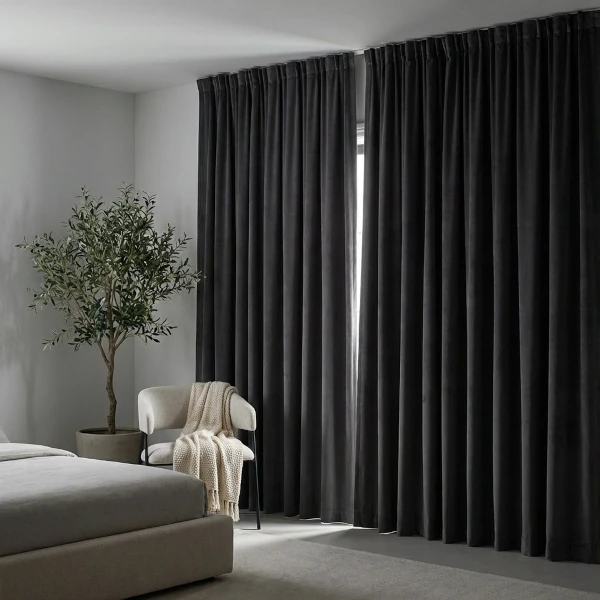
A blackout acoustic curtain can improve privacy, comfort, and overall wellbeing.
Blackout Acoustic Curtains: Sound, Light, and Privacy
Many acoustic curtains can also be combined with blackout fabrics.
This creates a more complete solution:
- Improved acoustic comfort.
- Greater privacy.
- Reduced light entry.
- Enhanced rest and relaxation.
- Better indoor atmosphere control.
- A more elegant appearance.
This type of solution is especially suitable for bedrooms, hotels, holiday apartments, TV rooms, or homes where both sound and light control are important.
A blackout acoustic curtain can be an excellent option for creating a more intimate, comfortable, and cosy environment.
Frequently Asked Questions
What are acoustic curtains?
Acoustic curtains are made from denser, heavier, or technical fabrics designed to help improve the acoustic comfort of a room by reducing reverberation, echo, and the overall sensation of noise.
Do acoustic curtains provide complete soundproofing?
No. Acoustic curtains do not replace structural soundproofing solutions and do not completely eliminate outside noise. They help absorb part of the sound and improve the acoustic feel inside the room.
Can acoustic curtains help reduce street noise?
They can help soften the perception of outside noise, especially when they are dense, have sufficient fullness, properly cover the window, and are professionally installed. However, they do not completely eliminate noise.
What is the difference between acoustic curtains and soundproof curtains?
Acoustic curtains are mainly designed to improve acoustic comfort and reduce reverberation. Soundproof curtains are often associated with reducing sound transmission, but a curtain alone should not be presented as a complete soundproofing solution.
Is it better to buy made-to-measure acoustic curtains?
Yes. A made-to-measure acoustic curtain is adapted to the width, height, type of window, fabric, and installation system, improving both the aesthetic result and functionality.
Where can I buy acoustic curtains in Málaga?
At Cortinas Factory Colors, you can find made-to-measure acoustic curtains in Málaga, with professional advice, suitable fabrics, curtain tracks, and installation service.